
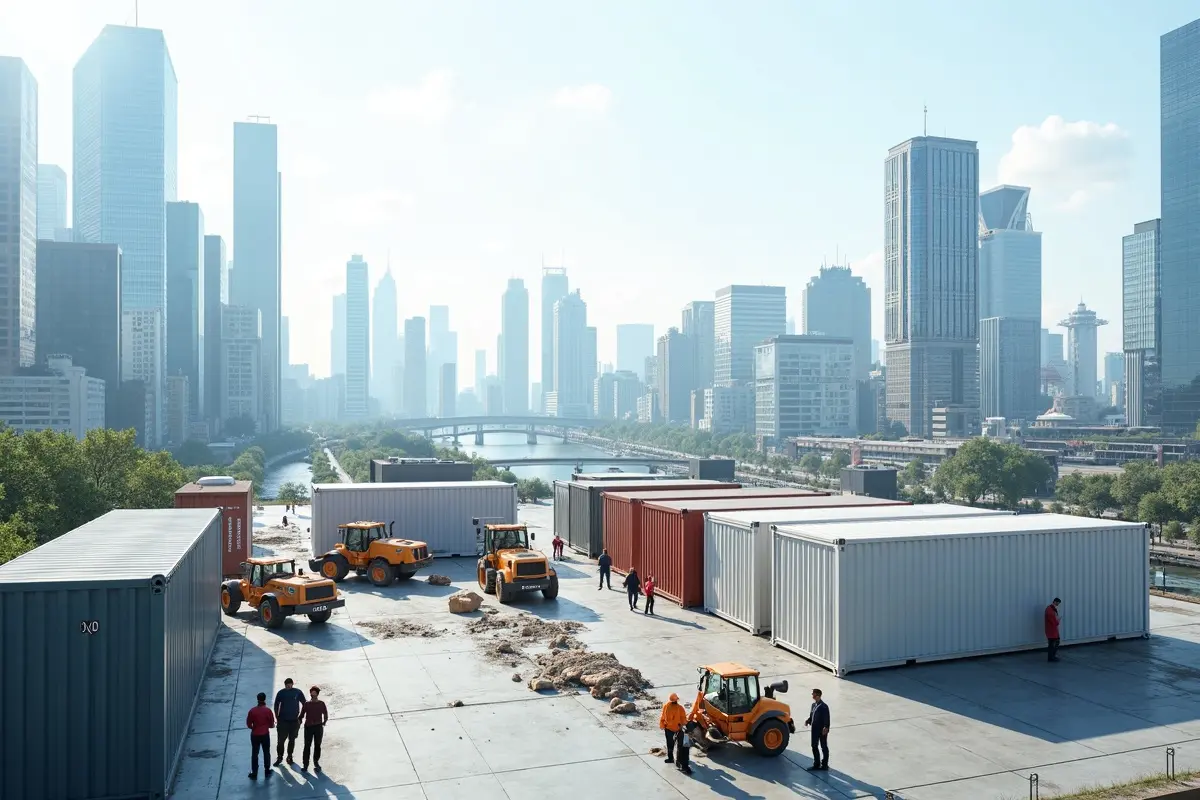
Innovative Applications of Temporary Storage Solutions in Urban Development
Urban development projects frequently encounter obstacles, particularly due to limited space and complex logistics. As cities expand and change rapidly, the demand for reliable, adaptable storage grows. The use of container rental options has become an essential aspect of modern urban planning, providing practical answers to temporary storage needs and supporting the evolution of city landscapes.
These solutions are not limited to just one sector. They benefit a wide array of urban activities by offering flexibility, efficiency, and the ability to adapt as project requirements evolve. From construction to last-mile logistics and community-driven initiatives, temporary storage plays a critical role in enabling progress while reducing disruptions and minimizing costs.
Enhancing Construction Efficiency
In densely populated areas, construction projects are often hindered by a lack of nearby storage. On-site temporary storage eliminates the need for distant warehouses, saving both time and money.
A notable example comes from a mid-sized contractor that replaced a remote storage facility with a temporary on-site warehouse, resulting in a 66% reduction in storage costs and a significant improvement in project scheduling. By keeping materials and equipment close, the potential for project delays shrinks, and workers can operate more efficiently.
In addition, the ability to adjust storage size on demand helps companies better manage inventory during rapid changes, ensuring resources are available precisely when and where needed. This reduces downtime and maintains project continuity, ultimately resulting in faster completion times and lower overhead.
Supporting Last-Mile Logistics
As e-commerce continues to transform consumer expectations and business operations, the efficiency of last-mile delivery has become a central concern. Temporary storage facilities positioned near ports, distribution centers, or within city limits play a crucial role in smoothing this final logistical hurdle.
By staging goods closer to their destination, companies reduce the distance products must travel before reaching consumers, leading to faster delivery times and lower transportation emissions. This approach also allows for quick adaptation to demand surges or disruptions, supporting the dynamic logistics landscape of modern cities.
Another aspect boosting the resilience of urban logistics is the shift toward modular solutions, including pop-up distribution hubs using adapted shipping containers. This strategy improves response times without committing to expensive permanent infrastructure, freeing up capital and keeping cities more agile as commerce and population trends shift.
Alongside rental options, businesses and urban planners increasingly consider long-term investments such as container sales for projects that require more permanent or customizable storage solutions. This flexibility makes storage containers valuable assets for urban environments experiencing ongoing transformation.
Addressing Homelessness with Temporary Housing
Beyond commercial and industrial uses, temporary storage solutions have shown immense potential for addressing pressing social challenges. An inspiring initiative in Atlanta—dubbed “The Melody”—repurposed shipping containers into dignified temporary housing for people experiencing homelessness.
This project did more than provide shelter; integrated on-site support services help residents transition to stable living conditions. Innovative approaches like these illustrate how adapting storage infrastructure can work hand in hand with social programs to improve the quality of life in urban centers.
Similar projects in West Coast cities have reduced unsheltered rates, suggesting that storage-based modular dwellings are a scalable response to persistent housing shortages. They are relocatable, cost-effective, and can be tailored to changing population needs, a crucial advantage for city leaders tackling complex urban challenges.
Revitalizing Underutilized Urban Spaces
Repurposing vacant or underused spaces is a priority for many city planners striving to maximize land use and encourage economic growth. Temporary storage units have facilitated the transformation of forgotten basements, empty lots, and even closed storefronts into vibrant self-storage hubs or pop-up business venues.
These creative ventures offer dual benefits: they address ongoing storage needs and contribute to the long-term vitality of neighborhoods by generating new streams of economic activity. The process is more sustainable as it avoids permanent construction and injects life into areas in need of investment.
Facilitating Sustainable Urban Development
Temporary storage solutions support sustainable development objectives by delivering modular, scalable infrastructure that can be reconfigured or removed as circumstances evolve. Cities leveraging these adaptable resources can build with less environmental impact than traditional construction projects.
When plans change, containers can be relocated or repurposed, helping cities nimbly adapt their built environment without excessive waste or cost. This positions temporary storage at the intersection of economic responsibility and environmental stewardship, an increasingly important consideration in urban planning.
As cities continue to grow and adapt to new realities, innovations such as smart storage containers, equipped with environmental sensors or solar panels, are likely to play a larger role in both operational efficiency and achieving sustainability targets.
Conclusion
In summary, temporary storage solutions are versatile tools for modern urban landscapes. Their role in boosting construction efficiency, optimizing last-mile delivery, addressing social issues, and breathing new life into neglected spaces highlights their importance in the evolving city.
With the flexibility to buy, rent, or repurpose storage containers, urban leaders and businesses are better equipped to face the challenges and opportunities presented by rapid development and change.